
Open-source and Self-hostable
A modern alternative to Microsoft Excel
Turn mission-critical spreadsheets into secure, scalable applications.
The spreadsheet interface, evolved
A Microsoft Excel alternative that combines the flexibility of a spreadsheet with the structural integrity of a relational database. It serves as the “fourth option” between risky spreadsheets, expensive custom development, and SaaS you can’t control.
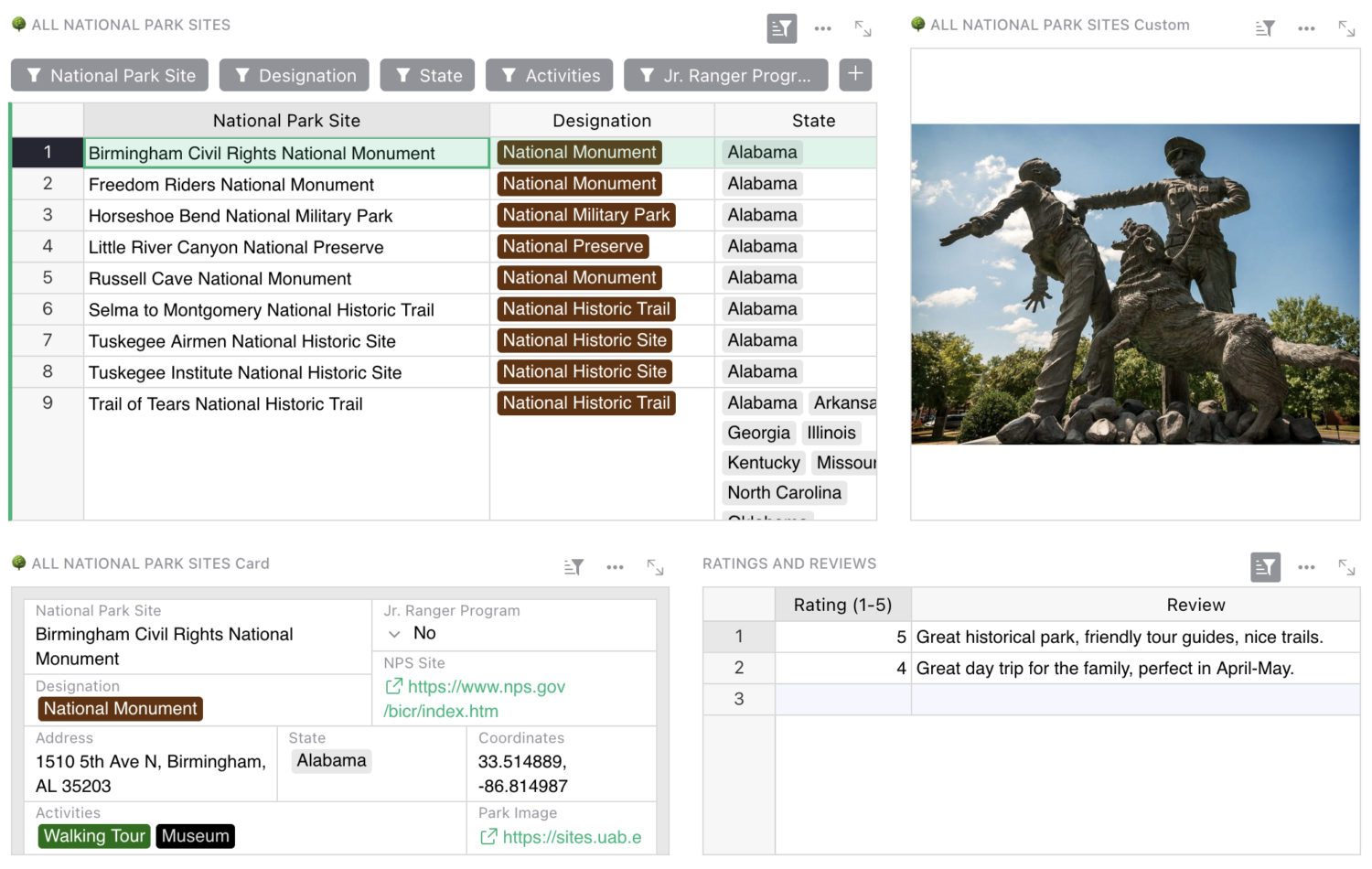
More than a frontend
Grist handles data from top to bottom, from SQL to advanced visualizations, all without taking away control of your data.
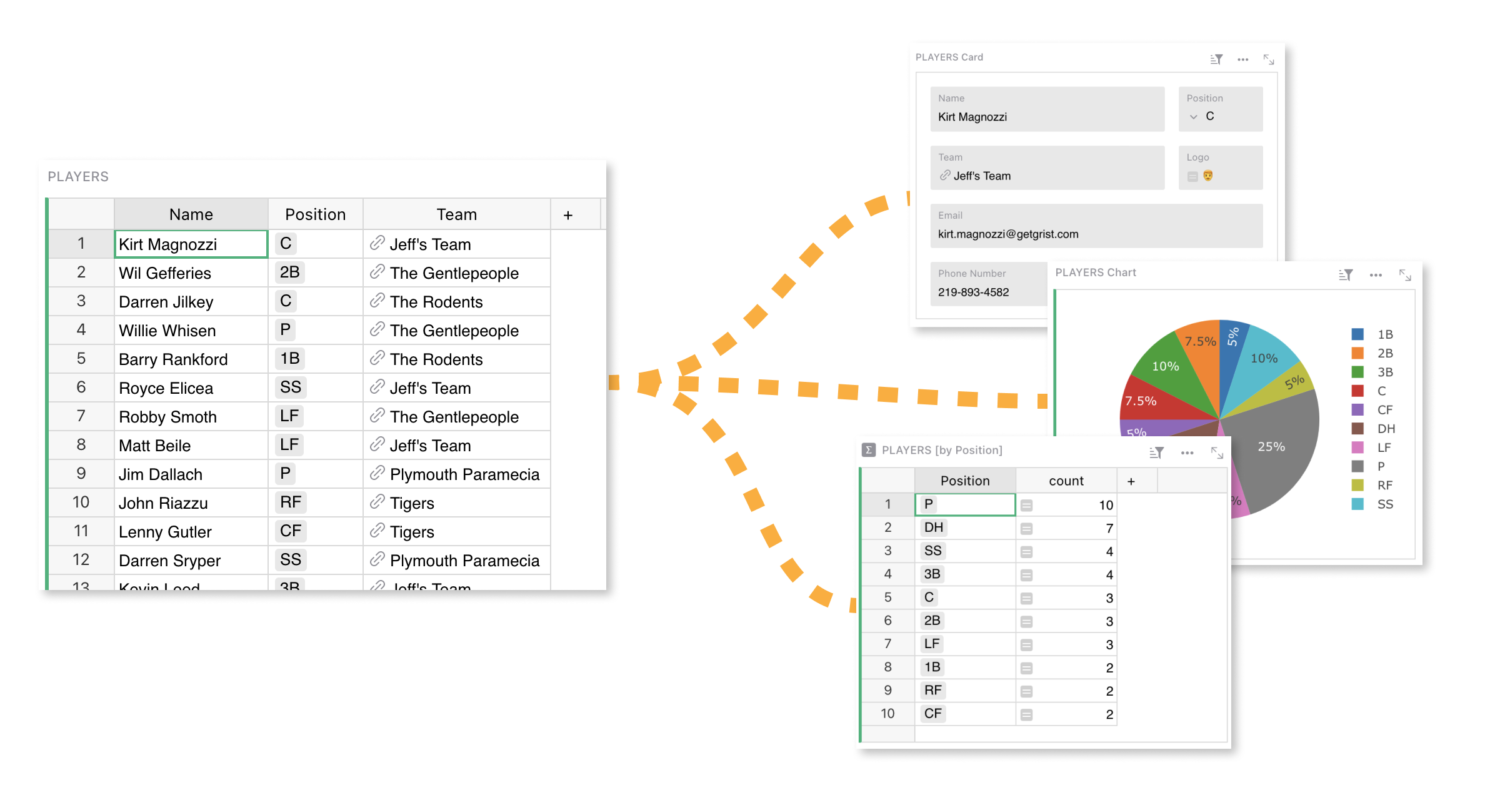
True relational structure
Replace brittle VLOOKUP links with records that update instantly across your entire document.
Granular access rules
Move from password protecting a sheet to row and column-level permissions (including down to the individual cell).
Python-powered analysis
Swap complex, unreadable Excel formulas for clear Python logic (Grist supports both).
Eliminate the load-bearing spreadsheet risk
When operations scale, Excel files become critical workflows running on fragile infrastructure. Grist turns these liabilities into secure applications, removing the risk of business continuity failures.
Single source of truth
End the final_v3_really.xlsx nightmare with one live version and automatic snapshots.
Data integrity
Prevent copy-paste errors with strict data typing and relational links.
Secure collaboration
Allow teams to edit simultaneously without file locking or overwriting data.
Audit trails
See exactly who changed what and when to ensure compliance.
Grist is the best Excel alternative for:
IT leaders needing to secure mission-critical operational data
Teams hitting the limits of VLOOKUPs and shared drive file locking
Organizations requiring self-hosted data for compliance
Engineers and analysts who want Python power in a spreadsheet interface
“I love Grist. It’s crazy powerful. I still can’t believe what we’ve been able to achieve in it. It’s the dream that low-code was sold as for years – we can do incredible things in each column with Python and we can build our own widgets to run on those! Wild!”
Elliot Lee
User Researcher
“Grist has become our go-to for more complex, structured data. It sits somewhere between Excel and Access—powerful, relational, and flexible enough for prototyping real data-driven applications.”
Olivier Lambert
CEO at Vates
“The more I use Grist, the more I LOVE it. I have been surveying self-hosted database GUI tools, and I was consistently disappointed with their shortcomings or bugginess. Grist is the first to have tilted the balance the other way.”
Stephen S.
Publications, Personal City Guides
“Grist has given us incredible flexibility to solve data problems and find solutions, whether it is for a small team at the district, or at scale with the entire district staff. We’re really excited about the different ways we can use it going forward.”
Director of Product
EdTech Company
“What I like about Grist the most is its focus. It appears simple, but it’s very powerful in a focused way. Grist has really improved our workflow and communication.”

Chris Scott
Co-founder in Digital Marketing
“If people spend some time learning a new tool they’ll have more power to do their work and research. I said to one of my students, ‘You will be very very happy using Grist because you are miserable using Excel!'”

Eduardo Dalcin, Ph.D.
Biodiversity Informatics Expert
“Most CRMs don’t work the way Grist works. Grist’s layouts are simple and do exactly what we need.”
Jennifer Bledsoe
IT Tech at Law Firm
“I discovered Grist after becoming frustrated with the limitations of Excel and Google Sheets. Grist has been a breath of fresh air, especially with its ability to handle structured data in a way that feels familiar to anyone with experience in relational databases, but with the added flexibility of Python.”